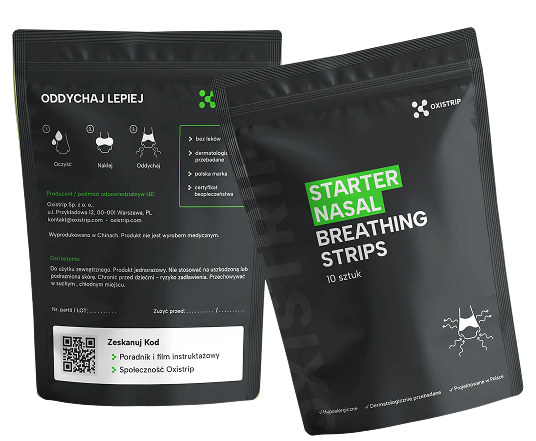
The Best Nasal Strips for Running and Sport
Ordinary nasal strips peel off mid-workout — here's what separates a real sports strip from the rest.

Ordinary nasal strips peel off mid-workout. Here's what separates a good sports strip from the rest, and why more and more runners are switching to nasal breathing.
Why athletes reach for nasal strips
Watch any running race, Hyrox event or cycling stage and you'll spot them — those little strips across the nose that have quietly become a fixture in the sports world. Athletes use nasal strips for the same reason they tape their ankles or wear compression socks: the small gains add up. By mechanically widening the nostrils, a nasal strip cuts airflow resistance by 25–40%, which means more air per breath without any extra effort. During long aerobic work — a long run, a time trial, a football match — that drop in breathing resistance translates into lower perceived effort and better pace. It's no magic bullet, but it's one of the cheapest legal performance boosters out there.
What makes a good sports strip
Not every nasal strip is built for exercise. The ones designed for sleep use a gentle adhesive that works fine on dry, still skin — but add sweat, movement and the flexing of your facial muscles, and they'll peel off within twenty minutes. A good sports nasal strip needs three things: a reinforced adhesive that holds even on sweaty skin, a flexible but tough spring mechanism that keeps its tension through dynamic movement, and breathable materials that don't trap heat or irritate your skin over a long session. Sweat resistance is the make-or-break factor. If a strip has ever curled up on you during a run on a humid summer day, you know exactly how frustrating that is. Look for strips clearly labelled for sport use with stated sweat resistance.
What nasal breathing does specifically for runners
Running is the discipline where nasal breathing really shines, and here's why: it works like a built-in pacer. When you breathe through your nose only, you can't run faster than your breathing capacity allows — you're forced to stay in the zone where your body processes oxygen efficiently. That's your aerobic sweet spot. Runners who train this way build a deeper aerobic base over time, which pays off on race day. There's a physiological bonus, too: nose breathing while you run engages the diaphragm more fully, stabilizing your core and improving your running economy. Plenty of coaches now prescribe "nose-only" easy runs as part of their athletes' training plans. The initial 15–20% drop in pace disappears within a month as your respiratory system adapts. We walk through a full 4-week transition plan in our guide to nasal breathing during training.
What sets Oxistrip Sport apart
We designed Oxistrip Sport specifically to solve the problems athletes kept telling us about. The reinforced medical-grade adhesive uses a moisture-activated formula — it grips better when you sweat, not worse. The spring mechanism is 40% stronger than a standard strip, holding the nostrils open even during high-intensity efforts with heavy facial movement. Each strip lasts up to 12 hours, which means it'll see you through a marathon, a full tournament day or a long trail run without a swap. The hypoallergenic material breathes along with your skin, so it won't irritate even sensitive noses. We tested them on runners using them in rain, heat and at altitude — the feedback is consistent: they hold where others fall off.
Practical tips for using strips during training
Getting the most out of a nasal strip comes down to how you apply it. First, clean your nose with soap and water or an alcohol wipe — oils and sunscreen are the number-one reason strips peel off. Put the strip on dry skin, press firmly for 10 seconds along its whole length, and give it a minute to set before you start moving. Position matters: the strip should sit just above the flare of your nostrils, not too high on the bony ridge. For longer sessions, pack a spare in case you need to reapply. Start using strips on your easy training runs before you take them to a race — you want to know how they feel before you're relying on them on race day. And one more thing: if you're switching to nasal breathing during exercise, be patient. Give yourself four to six weeks before you judge the results. The research behind nasal breathing is collected on our Science page.