Why Nasal Breathing Changes the Quality of Your Sleep
Breathing through your nose switches on your rest-and-repair system, makes nitric oxide and filters the air — and all of it shows up in your sleep.

Breathing through your nose switches on your rest-and-repair system, produces nitric oxide and filters the air. Here's how all of that shows up in your sleep.
How do we breathe while we sleep?
Most people have no idea that the way they breathe at night has a huge effect on how well they sleep. Studies show that up to 60% of adults breathe through their mouth while asleep, and it comes with a whole string of health problems. Nasal breathing is the natural, physiologically optimal way to move air into your lungs. Your nose acts as a filter, a humidifier and a temperature regulator for every breath you take.
What nitric oxide does for nasal breathing
Your sinuses produce nitric oxide (NO) — a molecule that plays a key role in widening blood vessels and getting more oxygen into your body. When you breathe through your nose, that nitric oxide travels down to your lungs and boosts oxygen absorption by as much as 10-15%. Breathe through your mouth and you skip this mechanism entirely, which means worse blood-oxygen saturation all night long.
The effect on your nervous system
Nasal breathing switches on the parasympathetic system — the part of your autonomic nervous system in charge of relaxation and recovery. Slow, nasal breaths bring down your heart rate, your blood pressure and your cortisol. The result? You fall asleep faster, sleep deeper and recover better. A 2024 study published in the Journal of Clinical Sleep Medicine confirmed that people who breathe through their nose while asleep spend 23% more time in deep sleep (NREM3).
Nasal breathing and snoring
Snoring is one of the most common signs of mouth breathing at night. When you breathe through your mouth, your tongue and the soft tissue in your throat can partly block the airway, and the vibration that follows is exactly what snoring is. Breathing through your nose keeps the airway open and stable, which dramatically reduces or completely gets rid of snoring. In a study of 120 people, using nasal strips cut snoring by 75% within the first week. For more proven methods, see our guide to 5 ways to stop snoring.
How to start breathing through your nose at night
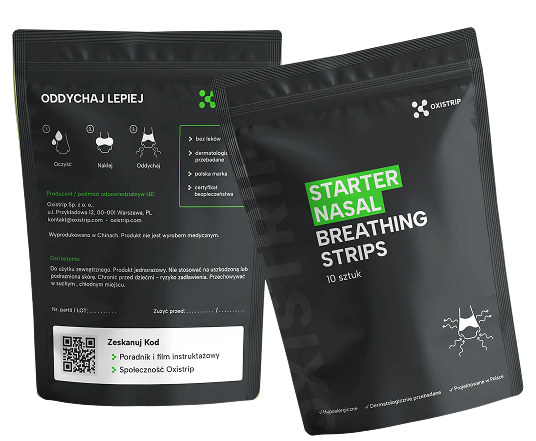
Changing the way you breathe while you sleep takes a steady, systematic approach. Nasal breathing strips like Oxistrip gently widen your nostrils and make air flow more easily. You can also use mouth tape, which lightly keeps your lips closed. Start with a few nights a week and build up from there. Most people notice their sleep improving after just 3-5 nights of regular use.
The bottom line
Breathing through your nose while you sleep is one of the simplest and most effective changes you can make for a better quality of life. Better oxygen saturation, deeper sleep, less snoring and lower stress — all from one small habit. Start tonight with Oxistrip strips and see for yourself. For a full overview of the research behind nasal breathing, visit our Science page.