The Benefits of Nasal Breathing for Sleep, Sport and Health
Your nose does far more than you think — from filtering air to making nitric oxide.

Your nose does far more than you think. From filtering air to producing nitric oxide, breathing through your nose shapes the quality of your sleep, your athletic performance and your overall health.
Your nose is a feat of engineering — your mouth, not so much
Your nose wasn't designed just for sniffing flowers. It's a sophisticated air-processing system that filters particles down to 0.5 microns, warms the air you breathe to body temperature, and adds moisture so it doesn't dry out your lungs. None of that happens when you breathe through your mouth. Mouth breathing sends raw, unfiltered, dry air straight into your airways — like driving a car with no air filter. The nasal cavity also produces nitric oxide, a molecule that widens blood vessels and improves oxygen uptake. Mouth breathers miss out on it completely, which is why they often feel more tired even though they're technically taking in the same volume of air.
Better sleep — deeper rest, less snoring
The link between nasal breathing and sleep quality is well documented. When you breathe through your nose at night, you switch on the parasympathetic system — the "rest and repair" mode that slows your heart rate and lowers cortisol. That translates directly into more time in deep sleep and REM. A clinical study at Stanford found that nasal breathers spent 23% more time in NREM3, the most restorative stage of sleep. Snoring drops off sharply too, because nasal breathing keeps the airway stable and stops the tissues in your throat from vibrating. If you wake up with a dry mouth or a sore throat, you're almost certainly breathing through your mouth — and fixing that one thing can turn your mornings around.
For sport — better performance, more endurance
The urge to gulp air through your mouth when you're pushing hard is strong, but it isn't always the smart move. Breathing through your nose during exercise forces your body to use oxygen more efficiently. Research shows that after 6–8 weeks of training with nasal breathing only, athletes hold the same VO2max while their breathing rate drops noticeably — every breath moves more air. The rise in nitric oxide from nasal breathing improves blood flow to the muscles you're working, which can delay fatigue. Runners who've made the switch report steadier pacing, less breathlessness at race pace, and faster recovery between intervals. It's not about restricting air — it's about training your respiratory system to work smarter.
For health — nitric oxide, immunity and more
Nitric oxide is the unsung hero of nasal breathing. Made in your sinuses, it has antimicrobial properties that help neutralize bacteria and viruses before they reach your lungs. That's one reason nasal breathers catch fewer respiratory infections. Beyond immunity, nitric oxide regulates blood pressure by relaxing the walls of your arteries — chronic mouth breathers often end up with elevated blood pressure as a result. Nasal breathing also supports better oral health. Mouth breathing dries out saliva, your natural defense against cavities and gum disease. Dentists see this connection all the time: patients who breathe through their mouth at night have far higher rates of decay and gum problems.
How to switch to nasal breathing
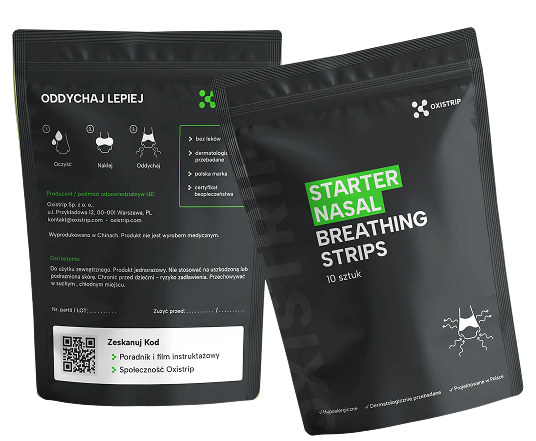
Moving from mouth breathing to nasal breathing doesn't happen overnight, but it's simpler than you'd think. Start during the day — consciously close your mouth and breathe through your nose while you work, walk, or watch TV. Once that feels natural, turn your attention to breathing through your nose at night. Oxistrip nasal strips physically open your nostrils, cutting resistance and making nasal breathing effortless. If you tend to fall open at the mouth while you sleep, add some medical-grade mouth tape. Within a week or two, most people find their body adapts and nasal breathing becomes the default. Consistency is the key — your breathing muscles need time to adjust, just like any other muscle you train. The research behind these benefits is collected on our Science page.